Sale
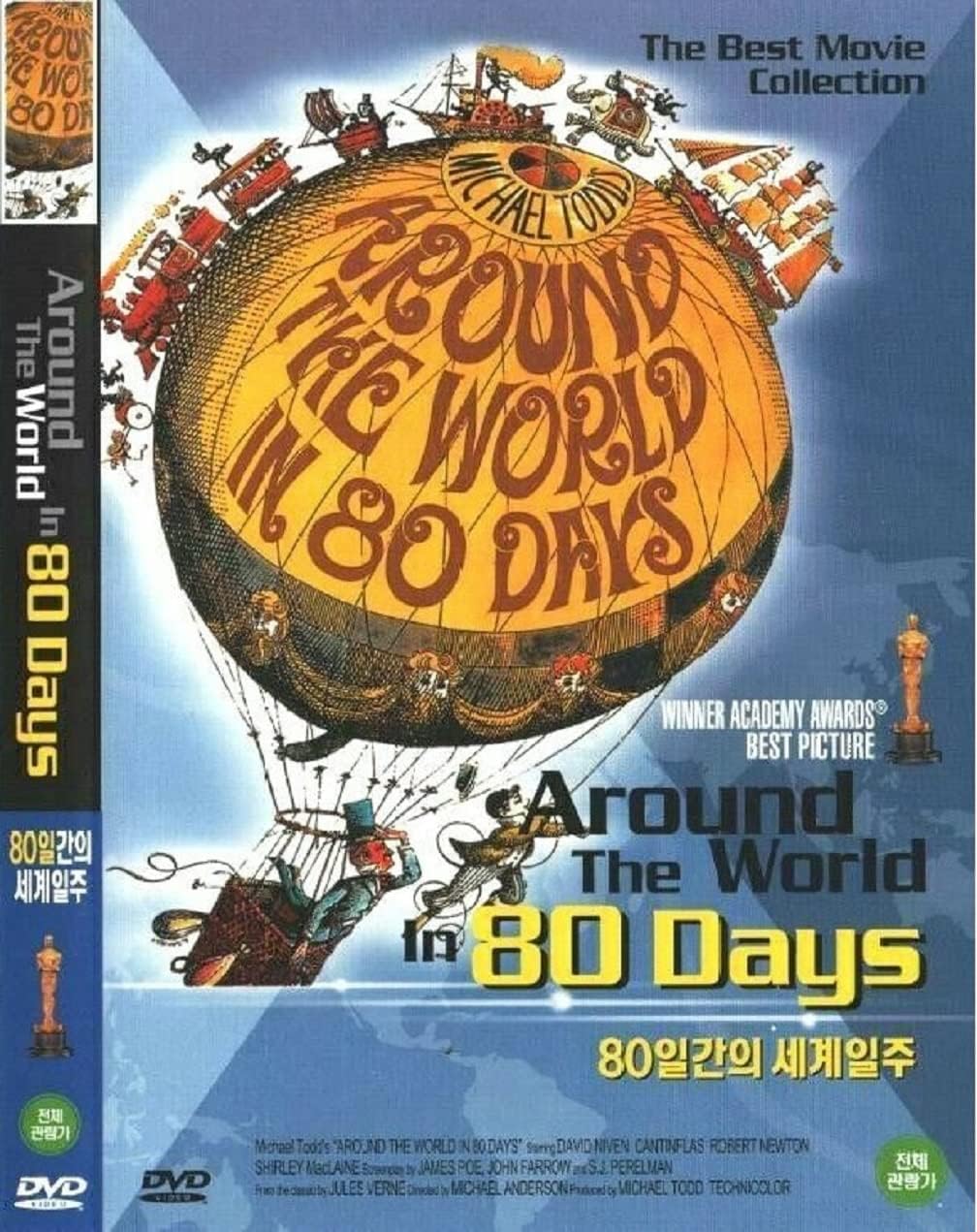
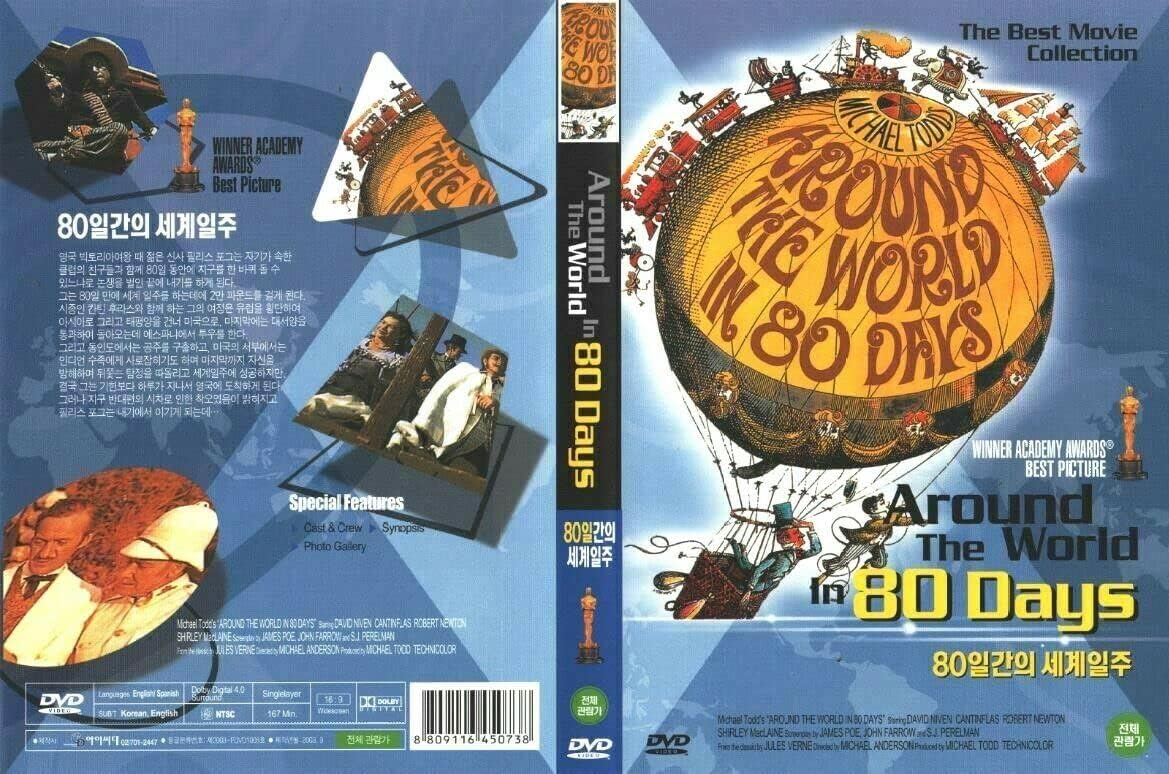
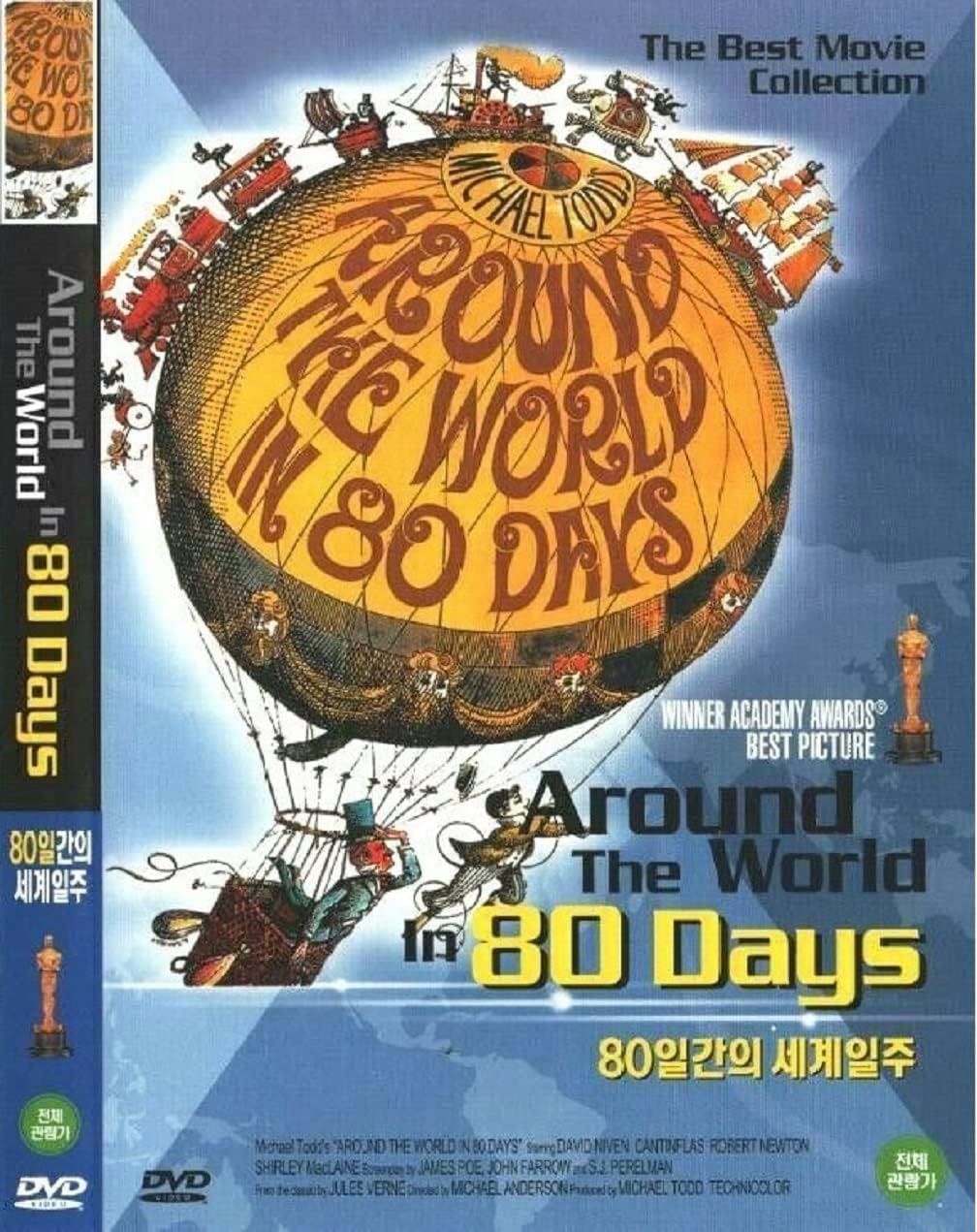
Around The World in Eighty Days (1956) DVD David Niven
$ 6.48
Option:
I can hardly begin to describe the popularity, cultural impact and seeming omnipresence of “Around the World in 80 Days” in 1957-58. Everyone saw it and talked about it. There was endless press and the theme song was on the radio all year long in both vocal and instrumental arrangements. It was a sensation, one of the year’s major events. It was the #2 box office hit of 1956 (it was released late that year) and was the #1 film on Variety’s Top Box Office list for seven months.The public loved it and even the critics gave it great reviews, though acknowledging that it was light entertainment. It even won the New York Film Critics Best Picture award, a group usually prone to more serious fare. Nevertheless, more recent critics have tended to dismiss it and there are valid reasons connected to it being a Cinerama-type film.The film also looked like few films the public had ever seen. It was part of Hollywood’s answer to the growing threat of television, which had cut movie ticket sales by one third to one half in the early 50s. In 1952 one answer was shown by Cinerama, a widescreen system using three cameras, three projectors and an elaborate sound system. It required a curved screen and specially set up theaters, resulting in limited locations that could show it. Still the audience went wild for it and their pictures sold millions of tickets. The studios found it too cumbersome and complicated and developed their own widescreen systems like 20th Century Fox’s CinemaScope and the independently created Panavision that could be shown on any wide screen without curves, and which eliminated the lines on the screen where the three pictures of Cinerama joined. It was, for its day, an immersive experience that audiences loved.This is where Mike Todd comes in. He was a well known producer of Broadway shows. He was reminiscent of Ziegfeld: extroverted, flamboyant, extravagant, a man everyone knew who went through wild swings of hits and misses, lavish parties and creditors. He had joined the Cinerama team in 1950 and directed part of “This Is Cinerama “ and filmed “Aida” at La Scala in the process, but was eventually dismissed because of his tendency to totally take over anything he was involved in. As a result, in partnership with others he came out with his own widescreen process, Todd AO. It could work with curved or flat screens and used only one camera and projector, eliminating the lines. Cinerama only made travelogs (until 1962). He would go them one better and produce a scripted film with actors.This is why some viewers today don’t quite get “Around the World in 80 Days”. While it is a film with actors, it is also a travelog of sorts and a big part of its draw was to give the audience visually immersive scenes to show off the process. This distorts the usual rhythm of filmmaking, stopping the action to show scenes of France or India before getting back to the plot. All in all it’s a series of tableaux, like a ride at a World’s Fair traveling from one country to another, representing each with obvious and cliched travelogue images. This is what the audience came to see, and it really wowed them, but now it seems like an interruption. Some of the action sequences, like representing India with Thugees and a settee, are cringy today.He even opened the film exactly like “This is Cinerama” with newsman Edward R. Murrow (Cinerama had used Lowell Thomas) sitting at a desk in the usual standard ratio that the audience was used to. His speech is full of the heady optimism of the 50s with statements like, “ The promise of a world of limitless power and limitless hope…of lifting it (humanity) up to high plateaus of prosperity and progress never dreamed of by the boldest of dreamers.” Then, after seeing more of Georges Melies’ “Trip to the Moon” than one usually sees, the curtains opened to reveal the amazingly wide screen, an effect that is still impressive today. It showed a rocket launch a mere 55 years after the Melies film was made.Being Mike Todd, he spared no expense, and the movie was very lavish for its day. There were second units sent out to film many of the sites in Europe, South Asia and the Western U.S. though most of the actors’ scenes were shot on sound stages. Spectacle was a big part of the film, like the 10,000 extras in the Spanish town and bullfight scene. Then he added something new, making the first film with 50 actors in cameo roles. This was one of the things everyone loved and talked about. I was just a kid then and didn’t really know these actors but my parents did and loved it. The film is almost a Who’s Who of British actors, all of whom had been in many American films as well. There were big names like Charles Boyer, Ronald Colman, Marlene Dietrich, Noel Coward, Peter Lorrie and everyone’s favorite, Frank Sinatra, who didn’t even say a word. People loved this then but more recent critics dismiss it as just a gimmick. It was repeated to a lesser extent in Cinerama’s “It’s a Mad, Mad, Mad, Mad World”The central cast is small but effective. David Niven is excellent as Phileas Fogg and it’s a tricky role. Of course he is a perfect British gentleman but he is not usually endearing. Fogg is obsessively punctual and scheduled, demanding, pompous and formal, at times described as “a tyrant” . But he’s efficient, resourceful, generous, brave and loyal. He goes out of his way to rescue Passeportout, even risking his life. In the end you know that beneath that difficult exterior is a fine person. Still, a film with only him would be difficult to enjoy.The film totally revived Niven’s career, making him an international star again after a down time in the early 50s. He had stupidly (as he admitted in his autobiography) antagonized his patron, Samuel Goldwyn, and for years he;d been doing mostly small British films. He got by by being one of the four stars of Four Star Productions, a major producer of 50s television.Cantinflas was already one of the biggest stars of Mexican cinema and in all Latin America. The film brought him a bigger audience and only the unfortunate flop of the film “Pepe”, designed to solidify his international appeal prevented it from lasting. He possessed a Chaplinesque “Little Tramp” quality that was very endearing. He was also genuinely funny and the real heart of the film, in many ways its true star. The scenes in Spain were added for him and are not in the book. It’s also actually him doing the bullfighting, something which he actually did, using no stunt double. He is warm, impulsive, fun-loving and childlike, the polar opposite of Fogg. Together, the form a fully rounded character, making up for each other’s deficiencies.. Shirley MacLaine is certainly far from an Indian woman and she always said she was miscast, but she played her role well-enough and gained many new fans in this, her third film. Robert Newton is Inspector Fixx, as close as one gets to a villain in this piece, which fortunately uses the race against time for its tension instead. In fact the film becomes “normal” in its final segment and creates genuine tension and suspense..The film was to be directed by John Farrow, but he only did some of the Spanish scenes before being fired by Todd. As with Cinerama, Todd had to be the real boss in control and Farrow didn’t agree. Todd then hired up-and-coming British director Michael Anderson (“The Sundowners”, “Logan’s Run”) who proved more willing to direct the film that Todd wanted. Composer Victor Young had worked in Hollywood for decades and had been nominated for the Best Score Oscar 23 times without winning. He finally won it for this though he died before the ceremony. The film is fun and family friendly. Just remember it was released in 1956 and is full of 50s assumptions and attitudes.